Last week, I watched my AI development framework monitor its own performance, recognize that it was losing focus, pause itself, preserve what it had learned, and come back fresh, then pick up exactly where it left off. No user interaction. No scripted trigger. It just… did it.
I sat there for a minute. Then I laughed, because ten months ago I was copy-pasting prompts into a terminal and hoping for the best.
Starting With a Hammer
Around June of last year, I started using Claude Code seriously. Twenty years in IT operations had taught me how to think in systems, but I’d never been a traditional developer. I didn’t live in an IDE. I thought in workflows, infrastructure, and problem-solving. Not syntax.
AI changed the equation. For the first time, I could translate how I think directly into working software. Not perfectly, not instantly, but the gap between “I know what this should do” and “this actually does it” shrank dramatically.
I started small. Built a tool to help me manage context better. Then a tool to help me organize prompts. Then a tool to help me track what was working and what wasn’t. Simple stuff. Useful stuff.
But here’s what I didn’t expect: each tool I built made the next one easier.
The Compounding Effect
This is the part that’s hard to explain to people who haven’t experienced it. When you build tools with AI, and those tools improve how you work with AI, you get a compounding effect that accelerates fast.
My first tools were rough. They worked, but they were duct tape and determination. The second generation was cleaner because I had better tools to build with. By the third generation, I wasn’t just building individual tools anymore. They were starting to talk to each other. Patterns emerged. Shared foundations appeared naturally.
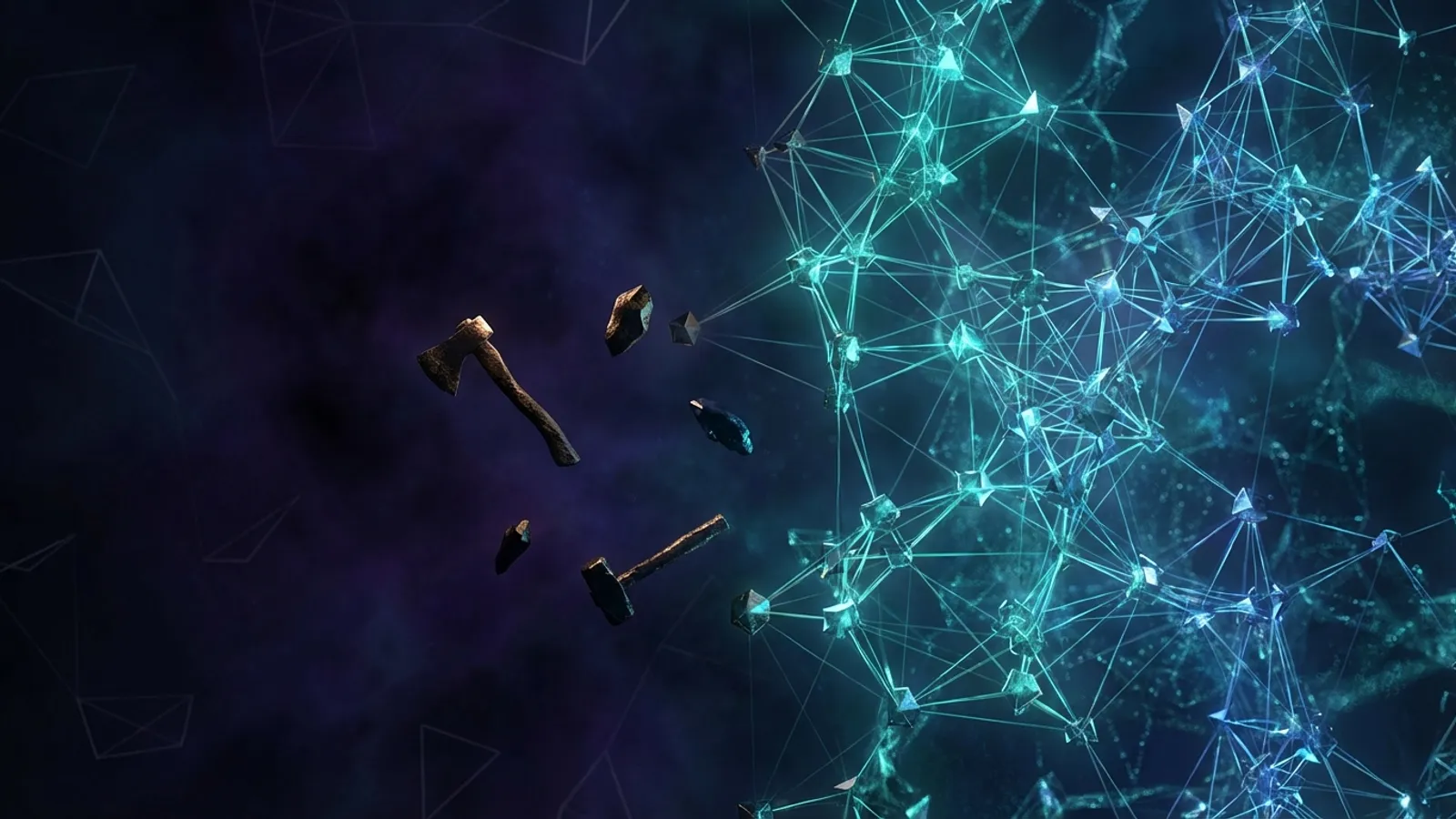
I’ve described this as using Claude Code “like a blacksmith,” and I stand by that analogy. A blacksmith doesn’t just make horseshoes. A good blacksmith makes better tongs, which make better hammers, which make better everything else. The tools compound.
If you’re serious about AI development, I’d highly recommend this approach. Don’t just build products. Build your toolset. The returns are exponential.
Convergence
Somewhere around the six-month mark, something shifted. The individual tools I’d been building started to feel less like a collection and more like a system. Not because I planned it that way from the start. I’ll be honest about that. It happened because the problems I was solving kept pointing toward the same underlying needs.
Context management. Memory. Coordination. Quality control. These aren’t separate problems. They’re facets of the same problem: how do you get consistently excellent results from AI over extended, complex work?
The tools converged into a unified framework. A system that doesn’t just help me write code, but orchestrates the entire development process. Think of it less like a single assistant and more like a team of specialists that know how to work together, each bringing something different to the table.
I won’t get into the architecture. That’s my secret sauce, and I’m far enough ahead that even if someone copies the broad strokes, I’ll still be months out front. In AI time, that’s an eternity. But I’ll share the philosophy, because that’s what actually matters.
The Philosophy
Most people use AI as a conversation. You ask, it answers, you refine, repeat. That works fine for simple tasks. It falls apart completely for anything complex.
The reason is something that’s about to become a buzzword if it hasn’t already: context management. Here’s the simple version: the context window is like exhaustion. As the model loads information into working memory, that window fills. When it’s full, performance degrades. The more packed it is, the less focused the results.
Sound familiar? It should. It’s exactly how we work. Try to hold too many things in your head at once and the quality of your thinking drops. The same is true for AI.
My framework is built around that insight. Instead of cramming everything into one marathon session and hoping for the best, the system is designed to work the way good teams work: focused effort, clear handoffs, and institutional memory that doesn’t depend on any single person (or session) remembering everything.
The result is something that produces consistently high-quality output across long, complex projects. Not just clever responses to individual prompts.
The Breakthrough
A few weeks ago, the system crossed a line I wasn’t sure was possible this soon.
Self-context-monitoring. The framework actively tracks its own cognitive load: how much context it’s carrying, how focused its outputs are, whether quality is starting to drift. When it detects degradation, it doesn’t just flag it. It acts. It preserves critical knowledge to long-term memory, compacts its working context, and resumes with a clean slate and full awareness of where it left off.
It takes its own breathers.
This isn’t a cron job or a timer. It’s responsive. It monitors its own performance in real-time and makes decisions about when to reset. I’ve watched it execute complex, multi-phase development work autonomously (building, testing, refining) while managing its own freshness without anyone telling it to.
I don’t want to oversell this, but I genuinely haven’t seen anyone else accomplish it. And the difference in output quality is dramatic. Consistent results across hours of complex work instead of the gradual degradation that plagues every long AI session.
What This Means
Here’s why this matters beyond my own workflow.
Smaller companies have always been outgunned by enterprises when it comes to technology. Not because small teams lack talent (often they have more of it per capita) but because building sophisticated systems requires sophisticated infrastructure and headcount that small companies can’t afford.
That’s changing. Fast.
The framework I’ve built lets me operate as a one-person development team with the output of something much larger. Not because AI replaced my thinking, but because it amplified it. The systems thinking I developed over twenty years in IT ops is the foundation. AI is the force multiplier.
This is what I mean when I talk about making AI development accessible to people who think in systems but don’t live in IDEs. You don’t need to be a career developer. You need to understand problems deeply and know what good solutions look like. AI handles the translation.
A tight-knit team of people who are good at what they do, armed with the right tools, can now compete with organizations ten times their size. That was theoretical eighteen months ago. It isn’t anymore.
What’s Next
I’m not ready to release the framework publicly. It’s my primary competitive advantage, and it’s evolving too quickly to freeze into a product right now. Every week it gets meaningfully better, and I’d rather keep pushing the boundary than stop to package what I have.
But the principles behind it? Those I’m happy to share. And the consulting work I do with clients is informed by everything I’ve learned building it. When I help a business integrate AI into their operations, I’m not guessing about what works. I’ve spent nearly a year testing it on myself.
My goal has always been to make work fun again. To take the best parts of small business culture (the agility, the ownership, the “we figure it out” mentality) and give those teams tools that let them punch way above their weight.
We’re getting there. And honestly? It’s the most exciting work I’ve ever done.
If you want to talk AI systems, development frameworks, or how any of this could apply to your business, my door is always open. Reach out anytime.
Found this helpful? Share it with others: